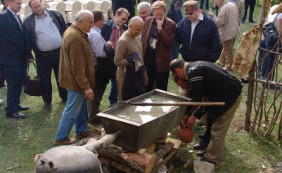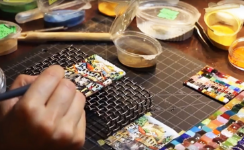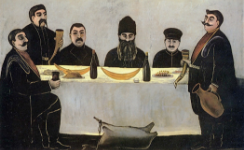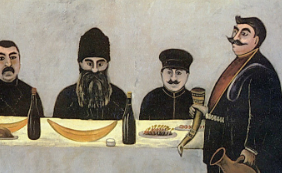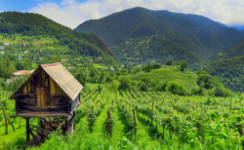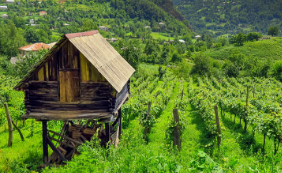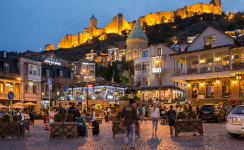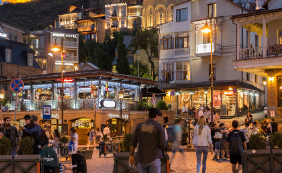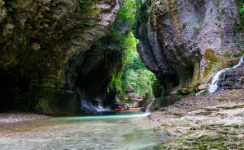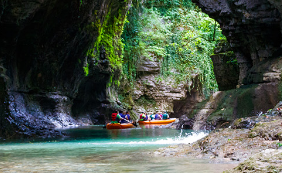

La provincia Imereti se menciona en las fuentes históricas como Egrisi, Lazika, Cólquida y Abkhazeti. Está situada a 125-300 metros sobre el nivel del mar. Los inviernos son suaves y los veranos relativamente calurosos. En la parte superior y la parte inferior Imereti está rodeada por la cordillera oriental Likhi, la cordillera del Gran Cáucaso y las montañas Meskheti. Al oeste de la cordillera de Likhi se encuentra la llanura de Rioni - una tierra de fertilidad y abundancia, rica en manantiales frescos, campos verdes, bosques frondosos y jardines delicados y bien cuidados. Aquí se encuentra la antigua capital del Reino de Cólquida - Kutaisi, ahora la segunda ciudad más grande de Georgia. Entre los importantes sitios culturales de Imereti podemos mencionar: iglesia Ubisi (s. IX), catedral Bagrati (s.XI), complejo monástico Gelati (s.XII), Motsameta, sitio arqueológico Vani, Geguti (VIII-XIII c) y las ruinas de la fortaleza Ukimerioni.
KAKHETI
REGIÓN
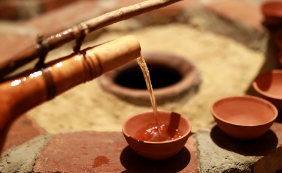
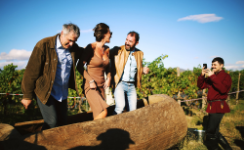
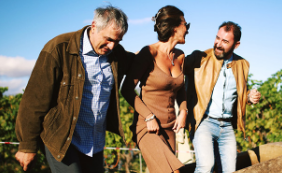
Kakheti – la región al este de Georgia que recoge los caudales de los ríos Lori y Alazani. La cordillera Gombori es una frontera natural entre la parte externa de Kakheti y la parte interna. La más pintoresca y fértil parte de Kakheti se encuentra al norte del valle Alazani el cual bordea las montañas del Cáucaso, con picos de hasta 3000 metros de altura y con laderas cubiertas de bosques de carpe y robles que van dejando lugar a los prados sub-alpinos y alpinos. Las partes más particulares de Kakheti son llamadas Gare (exterior) Kakheti (en la parte media del valle Lori), Kizikhi (parte baja del valle Lori) y Shida (interior) Kakheti (parte oeste del valle Alazani). Los inviernos en Kakheti son fríos aunque los veranos pueden llegar a ser extremadamente calurosos. Kakheti es la tierra del vino y desde tiempos remotos ha sido la provincia georgiana líder en producción de vino. Entre sus principales atracciones culturales encontramos: la basílica de Gurdjaani (siglo XIII), Ninotsminda (siglo VI), el complejo monástico de Shuamta (siglos VI-VII), Alaverdi (Siglo XI), Ikalto (siglo XII), Gremi (siglo XV-XVI), el complejo arquitectónico de Nekresi (siglos V, VII, VIII, IX), Bobde, Kisiskhevi (siglos VIII-IX), Akura (siglo IX), Khornabuji, Udjarma (siglos V-X).
KARTLI
REGIÓN
La región Kartli está situada en el este de Georgia. Comprende Tbilisi y sus alrededores y es a menudo llamado "el corazón de Georgia". La etimología del nombre "Kartli" no está del todo clara. Algunos expertos lo conectan con el nombre tribal - Kartli (kartu) - que significa "lugar cercado". También podría derivar del nombre del etnarca Kartlos, que residía en esta zona en tiempos antiguos.
El territorio fue intensamente habitado desde la Edad del Bronce (principios del tercer milenio). En los siglos IV-III a.C., un primer estado habitado por la alta sociedad fue creado en la parte este de Georgia siendo Mtskheta su centro. Muchas rutas importantes pasaban por Kartli;, entre ellas la famosa “Ruta de la Seda” - que une Europa Occidental con la India, “la ruta de camello” y “la Ruta del sueño”. Esta región tiene un clima seco aunque disfrutan de una tierra fértil y abundantes frutas y verduras. El paisaje varía desde bosques frondosos y oscuros hasta valles verdes, manantiales y corrientes fuertes. Kartli es rica en importantes monumentos arquitectónicos: la iglesia de Betania (siglos XII-XIII), Uplistsikhe (primera mitad del primer milenio a.C.), la iglesia de Kintsvisi (siglo XIII), Tsromi (siglo VII), Tsigrugasheni (siglo XIII), la basílica de Bolsini (siglos VI-VII), Sioni de Dmanisi (siglos VI-XIII) y todos los puntos de interés de Mtskheta y Tbilisi.
KHEVI
REGIÓN
164 km de Tbilisi
Khevi es un área en el este de Georgia en lo alto (a unos 1740 metros sobre el nivel del mar) de las laderas de la cordillera del Cáucaso. Incluye las gargantas de los ríos Truso, Tergi y Snostskhali. A principios de la Edad Media se llamaba Khevi (quebrada) de Tsanareti. El nombre Khevi significa "muchos habitantes a lo largo del río".
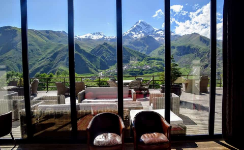
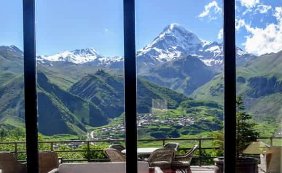
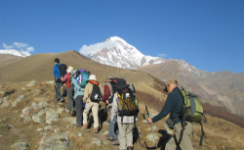
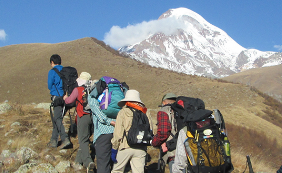
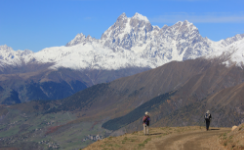
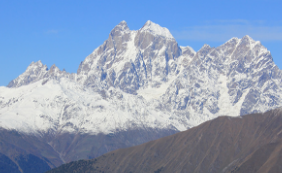
La gente de Khevi son llamados Mokheves. En la antigüedad, un camino de gran importancia estratégica y militar fue construido a través de cañón Dariali - un corte de 15 km en la tierra. Hoy en día este camino es conocido como la carretera militar georgiana, que conecta el norte del Cáucaso con la parte transcaucásica. El paisaje es impresionante y severo con praderas alpinas salpicadas de rododendro amarillo, pasos de montaña y cascadas, y el maravilloso Mkinvartsveri con su cumbre nevada - un volcán inactivo 5047 metros de altura. Entre los importantes sitios culturales de la región Khevi se encuentran: iglesia de la Santa Trinidad Gergeti (s.XIV), iglesia Garbani (siglos IX-X), basílica de Sioni (s.IX ), complejo monástico Betlemi (siglos IX-X) y la fortaleza Sno.
MTIULETI
REGIÓN
120 km de Tbilisi
Mtiuleti es una región situada al este de Georgia, principalmente a 10 metros sobre el nivel del mar. Incluye el acantilado del río Tetri Aragvi. Por el sur, se encuentra Mtiulkari; por el norte, Trusoskari y Khevi; por el este, Mtiuleti está bordeada por el desfiladero de Gudamakari y por el oeste, por la cordillera de Lomisi. La naturaleza es muy pintoresca con valles alpinos llenos de azaleas amarillas, puertos de montaña repletas de torres de vigilancia medievales, brillantes cascadas, profundos y oscuros barrancos y enormes glaciares. Numerosas pequeñas iglesias y basílicas, torres defensivas, fortificaciones, el complejo de Ananuri (siglo XVI), Bodorna, Khorogo, Tseskhli djvari, monasterio de Gudi, todos ellos son preservados con minucioso cuidado en Mtiuleti.
ALAVERDI
KAKHETI
IGLESIA INSCRITA EN CRUZ
155 km de Tbilisi
s.11
La catedral Alaverdi es un símbolo del florecimiento de la cultura georgiana. Construido en el siglo 11, un período de gran desarrollo cultural y político del país, fue una de las mayores construcciones de Georgia y la iglesia más alta de su tiempo. El exterior está decorado con cinco elegantes arcos y la fachada tiene excelentes decoraciones en piedra. Estas a menudo representan símbolos de vid y del sol. Las pinturas murales fueron gravemente dañadas durante los siglos, pero algunos frescos han sido parcialmente restaurados. La catedral está rodeada por unas murallas defensivas impresionantes.
BAGRATI
IMERETI
RUINAS DE LA IGLESIA ABOVEDADA
250 km de Tbilisi
Siglos 10-11
Iglesia Bagrati de la Asunción de la Virgen fue construida por el rey Bagrat III en Kutaisi en el año 1003 a.C. Es un maravilloso ejemplo iglesia de arquitectura abovedada de la época alta de la Edad Media, dotada de impresionantes ejemplos de talla en piedra.
La Catedral, parcialmente en ruinas, está situada en la parte superior de la colina llamada Ukimerioni y tiene una vista espléndida de la segunda ciudad más grande de Georgia, Kutaisi. Se trataba de una antigua ciudadela, un palacio real y uno de los castillos más importantes del s. VI al a.XII.
GELATI
IMERETI
IGLESIA INSCRITA EN CRUZ
259 km de Tbilisi
s. 12
El complejo Gelati está compuesto por las iglesias de la Virgen (la iglesia principal), de San Nicolás, de San Jorge, así como la academia que era el centro de la vida cultural y espiritual. El complejo del monasterio Gelati fue fundado por el rey David el Constructor en el siglo XII. Es conocido como uno de los mejores ejemplos de pintura mural de Georgia. Entre ellos se encuentra el único retrato que se conservó del Rey David el Constructor cuya tumba se encuentra en la entrada del monasterio. El mosaico gigante del siglo XII de la Virgen con el Niño es completamente único.
GREMI
KAKHETI
FORTALEZA E IGLESIA
175 km de Tbilisi
Siglos 16 - 17
El complejo arquitectónico Gremi, de los siglos XVI-XVII, fue construido por el rey Levan y la reina Ketevan sobre una colina rocosa. En el s. XVI, Gremi fue la capital del reino de Kakheti, pero todo lo que queda de la antigua ciudad son algunas ruinas de un mercado, baños, caravasares y un palacio. El actual complejo solía ser una fortaleza y se compone de una torre, cámaras de rey, muros defensivos y una iglesia de cúpula central del Arcángel construida con ladrillos cuadrados. El interior de la iglesia está decorado con frescos del siglo XVII.
IKALTO
KAKHETI
IGLESIA INSCRITA EN CRUZ
152 km de Tbilisi
Siglos 6 - 12
La academia Ikalto es un centro religioso y educativo, fundada por el Rey David el Constructor en los siglos XI-XII. La primera iglesia del complejo fue fundada en el siglo VI por Zenon, uno de los Trece Santos Padres Asirios que llegaron a Georgia para fortalecer la fe cristiana.
El complejo está formado por la iglesia Sameba – s.VI; basílica de una nave – s.IX, la iglesia principal dedicada a "peritsvaleba" – transfiguración, construida en los siglos VIII-IX y reconstruida en el siglo XIX, y la academia medieval. Según una leyenda, el famoso poeta georgiano Shota Rustaveli estudió allí.
JVARI
KARTLI / MTSKHETA
IGLESIA INSCRITA EN CRUZ
30 km de Tbilisi
siglos 6 – 7
Jvari es una obra maestra de la época medieval. Se asienta sobre una montaña frente a la antigua ciudad de Mtskheta. Santa Nino erigió la primera cruz de madera en este lugar. Su pedestal todavía se puede ver en el centro de la iglesia. Este ejemplo de diseño clásico tetraconch con su tamaño miniatura, impresiona a los espectadores con su grandeza y su integridad. El interior una vez estuvo decorado con mosaicos aunque actualmente está prácticamente vacío. Desde la iglesia se abre ante nuestros ojos una espectacular vista a todas direcciones de igual manera que este edificio es fácilmente visto desde diferentes puntos.
MOTSAMETA
IMERETI
COMPLEJO DE MONASTERIOS
265 km de Tbilisi
Siglos 8-11
El complejo monasterial de Motsameta (de los siglos VIII-XI) está muy bien situado entre los valles de dos ríos cerca de Kutaisi. En el siglo VIII, los hermanos David y Konstantine Mkheidze, los Señores de la región, fueron asesinados aquí por los árabes, por su negativa a convertirse al Islam.
La antigua iglesia fue destruida. El complejo de monasterios actual fue construido en lugar de la antigua iglesia por el rey Bagrat en el siglo XI. El Monasterio "Motsameta" significa "monasterio de los mártires". Los restos sagrados de los hermanos se mantienen en la cripta de la iglesia.
NEKRESI
KAKHETI
BASÍLICA
165 km de Tbilisi
Siglos 6 - 12
El complejo monasterial de Nekresi en la región de Kvareli, con una impresionante vista al valle Alazani, fue fundado por San Abibo Nekreseli, uno de los 13 monjes Asirios que llegaron a Georgia durante el siglo VI para fortalecer la fe cristiana en el país. Aunque ya en el siglo IV, una de las primeras iglesias cristianas fue construida aquí.
La iglesia más antigua es una pequeña basílica con los arcos abiertos en la fachada para realizar el servicio desde el exterior. La iglesia principal de la Asunción de la Virgen fue construida en los siglos VI y VII. Las tres naves que componen esta basílica están separadas por muros y forman esta peculiar iglesia, única en Georgia.
SIGHNAGHI
KAKHETI
FORTALEZA
144 km de Tbilisi
s. 18
Sighnaghi - una ciudad real rodeada por murallas con 23 torres. Cada una de estas torres fue llamada como las aldeas cercanas y las familias respectivas y sirvieron de refugio en caso de peligro.
Estos magníficos muros fueron construidos por el rey Heracles II para proteger la zona de las incursiones de los Lezgins del norte del Cáucaso. La ciudad fue habitada principalmente por comerciantes y artesanos. Tenía muchas puertas a través de los cuales numerosos viajeros de Ruta de la Seda de Asia y Europa pasaban en su camino.
SIONI
TBILISI
IGLESIA DE CÚPULA EN CRUZ
A 1,5 km de la plaza de la libertad
Siglos 6 - 7
La Catedral Sioni se inició en el año 500, durante el reinado del rey Guaram de Iberia. Fue terminada en 620, cuando gobernaba el rey Adarnese I. La catedral ha sido saqueada y dañada muchas veces a lo largo de su historia. Sin embargo, a pesar de los estragos y la destrucción a la que fue sometida, Sioni ha sobrevivido y en muchos términos, se puede considerar un símbolo de la ciudad. La estructura general data del Siglo de Oro de Georgia, en el siglo XIII. Después de cada destrucción fue restaurada hasta su estado anterior añadiéndole nuevos elementos. En el siglo XIX, usando los diseños de Grigory Gagarin, toda la iglesia fue pintada. Hoy, los frescos de Gagarin son visibles en la parte superior de la catedral. Los frescos que decoran los muros inferiores son muy modernos. Estos se completaron en 1989 y son obra del artista Levan Tsutskiridze. Todos los iconos de la catedral son georgianos.
SVETITSKHOVELI
KARTLI / MTSKHETA
IGLESIA INSCRITA EN CRUZ
25 Km de Tbilisi
s.11
Svetitskhoveli, que puede ser traducido como "el pilar que da vida", es la iglesia principal de Mtskheta y un lugar sagrado donde está guardada la túnica de Cristo. Un cedro enorme crecía en el lugar donde fue enterrada la túnica de Cristo. El lugar fue elegido como sitio para la futura iglesia.
Las ramas de este árbol mágico sirvieron como pilares para la construcción de esta iglesia. Este brillante ejemplo de arquitectura georgiana renacentista fue construido por el arquitecto Arsukidze en siglo XI, en el lugar donde estuvo la primera iglesia en Georgia en el s.IV.
UBISI
IMERETI
COMPLEJO ARQUITECTÓNICO Y LA IGLESIA
195 km de Tbilisi
S. 9
El pintoresco complejo Ubisi consta de una sola nave basilical del siglo IX, viviendas-torres de tres pisos llamadas "sveti" (pilar) y algunos edificios monásticos subsidiarios, ahora casi totalmente destruidos por el tiempo. La torre tiene una inscripción que data el monasterio y la torre del año 1141 a.D. El campanario es una época posterior. La iglesia de Ubisi proviene del siglo XIV. De acuerdo con la larga tradición, la cripta y las paredes están prácticamente totalmente cubiertas por pinturas.
UPLISTSIKHE
KARTLI
CIUDAD EN CUEVAS - FORTALEZA
80 kilómetros de Tbilisi
1 ª mitad del primer Milenio a.C.
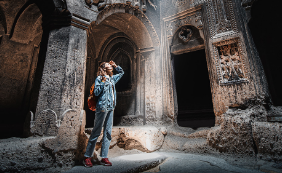
Uplistsikhe, que significa "La Fortaleza de Dios", es una ciudad antigua en cuevas de la 1 ª mitad del 1er milenio a.C., situada en el cruce de rutas comerciales importantes. Fue el centro principal del paganismo y representa un complejo de salas, cuevas, teatros, templos, altares paganos, túneles, prisiones secretas, farmacia, pasajes calles, todos tallados en piedra en una superficie de 4 hectáreas. En el apogeo de su prosperidad, la ciudad tenía una población de 20 000 habitantes. En los siglos IX – X, una basílica de tres naves fue añadida al complejo.
UPLISTSIKHE
KARTLI
CIUDAD EN CUEVAS - FORTALEZA
80 kilómetros de Tbilisi
1 ª mitad del primer milenio a.C.
Uplistsikhe - que significa "La Fortaleza de Dios", es una ciudad antigua en cuevas de la 1 ª mitad del 1er milenio a.C. situado en el cruce de las rutas comerciales importantes. Fue el centro principal del paganismo y representa un complejo de salas, cuevas, teatros, templos, altares paganos, túneles, prisiones secretas, farmacia, pasajes-calles, todos tallados en piedra en una superficie de 4 hectáreas. En el apogeo de su prosperidad, la ciudad tenía una población de 20.000 habitantes. En los siglos 9-10 una basílica de tres naves fue añadida al complejo.
SIGHNAGHI
KAKHETI
FORTALEZA
144 km de Tbilisi
s. 18
Sighnaghi - una ciudad real rodeada por murallas con 23 torres. Cada una de estas torres fue llamada como las aldeas cercanas y las familias respectivas y sirvió de refugio en caso de peligro.
Estas paredes únicas fueron construidas por el rey Heracles II para proteger la zona de las incursiones por Lezgins del norte del Cáucaso. La ciudad fue habitada principalmente por comerciantes y artesanos. Tenía muchas puertas a través de los cuales numerosos viajeros de Ruta de la Seda de Asia y Europa pasaban en su camino.
UPLISTSIKHE
KARTLI
CIUDAD EN CUEVAS - FORTALEZA
80 kilómetros de Tbilisi
1 ª mitad del primer Milenio a.C.
Uplistsikhe - que significa "La Fortaleza de Dios", es una ciudad antigua en cuevas de la 1 ª mitad del 1er milenio a.C. situado en el cruce de rutas comerciales importantes. Fue el centro principal del paganismo y representa un complejo de salas, cuevas, teatros, templos, altares paganos, túneles, prisiones secretas, farmacia, pasajes-calles, todos tallados en piedra en una superficie de 4 hectáreas. En el apogeo de su prosperidad, la ciudad tenía una población de 20.000 habitantes. En los siglos 9-10 una basílica de tres naves fue añadida al complejo.
JVARI
KARTLI / MTSKHETA
IGLESIA
INSCRITA EN CRUZ
30 km de Tbilisi
ss. 6 º - 7 º
Jvari es una obra maestra de la época medieval temprana. Se asienta sobre una montaña enfrente de la antigua ciudad de Mtskheta. Santa Nino erigió la primera cruz de madera en aquel lugar. Su pedestal todavía se puede ver en el centro de la iglesia. Este ejemplo de diseño clásico tetraconch con todo su tamaño miniatura, impresiona a los espectadores con su grandeza y su integridad.
El interior una vez estuvo decorado con mosaicos aunque actualmente está prácticamente vacío. Desde la iglesia se abre ante nuestros ojos una espectacular vista a todas direcciones de igual manera que este edificio es fácilmente visto desde diferentes puntos.
SVETITSKHOVELI
KARTLI / MTSKHETA
IGLESIA INSCRITA EN CRUZ
25 Km de Tbilisi
s.11
Svetitskhoveli - que puede ser traducido como "el pilar que da vida", es la iglesia principal de Mtskheta y un lugar sagrado donde está guardada la túnica de Cristo. Un cedro enorme crecía en el lugar donde fue enterrada la túnica de Cristo. El lugar fue elegido como sitio para la futura iglesia.
Las ramas de este árbol mágico sirvieron como pilares de construcción. Este brillante ejemplo de arquitectura georgiana renacentista fue construido por el arquitecto Arsukidze en siglo 11, en el lugar donde estuvo la primera iglesia de Georgia en el s.4.
BAGRATI
IMERETI
RUINAS DE LA IGLESIA ABOVEDADA
250 km de Tbilisi
Siglos 10-11
La iglesia Bagrati de la Asunción de la Virgen fue construida por el rey Bagrat III en Kutaisi, en el año 1003 a.C. Es un maravilloso ejemplo de la arquitectura abovedada de la época alta de la Edad Media, dotada de ejemplos impresionantes de la talla en piedra.
La Catedral parcialmente en ruinas está situada en la parte superior de la colina llamada Ukimerioni y tiene una vista espléndida de la segunda ciudad de Georgia, Kutaisi. Se trataba de una antigua ciudadela, un palacio real y uno de los castillos más importantes del s. 6 al a.17.
GELATI
IMERETI
IGLESIA INSCRITA EN CRUZ
259 km de Tbilisi
s. 12
El complejo Gelati está compuesto por las iglesias de la Virgen (la iglesia principal), de San Nicolás, de San Jorge, así como la academia que era el centro de la vida cultural y espiritual. El complejo del monasterio Gelati fue fundado por el rey David el Constructor en el siglo 12. Esta reconocido como uno de los ejemplo de más calidad de pinturas murales georgianas. Entre ellos se encuentra el retrato único que se conservó del Rey David el Constructor, cuya tumba se encuentra en la entrada del monasterio. El mosaico gigante del siglo 12 de la Virgen con el Niño es completamente único.
KHEVI
RÉGION
164 km de Tbilissi
Khévi est une région de la Géorgie orientale perché (à environ 1740 m du niveau de mer), sur les pentes des monts du Grand Caucase. Il réunit les gorges des rivières Trusso, Tergi et Snostskhali. Au moyen Age ça s'appelait Khévi (gorge) de Tsanareti. Le mot Khévi veut dire « beaucoup d'habitants le long de la rivière ». Les gens de Khévi sont appelés les Mokhèves. Dans l'antiquité, une route d'une grande importance stratégique et militaire a été construite dans le défilé de Darial – un tunnel de 15 km dans la terre. Aujourd'hui, cette route est connue comme la route militaire de Géorgie, qui relie le nord du Caucase avec la Transcaucasie. Le paysage est impressionnant et sévère avec des alpages parsemés de rhododendron jaune, des cols de montagne et des cascades et le merveilleux Mkinvartsvéri enneigé - Mont Kazbek - volcan éteint de 5047 mètres de haut. Parmi les importants sites culturels de la région de Khévi sont: Guérguéti, église de la Trinité (14es), église Garbani (9e-10es), Basilique de Sioni (9e s), forteresse et monastère de Betlémi (9e-10es) et Sno.
MTIULETI
RÉGION
120 km de Tbilissi
Mtiuleti est une région de Géorgie orientale. Situé principalement à 1050 m d'altitude, il comprend les gorges de la rivière Tetri Aragvi. Du côté sud de Mtiuleti se trouve Mtiulkari, au nord - Trusoskari et Khevi – à l'est, elle est limitrophe avec les gorges de Gudamakari et de l'Ouest - de Lomisi.
La nature est pittoresque avec des prairies alpines de rhododendron jaune, parsemés de tours de guet médiévales, chutes d'eau pétillantes, sombres gorges profondes et glaciers géants pas loin des cols de montagne. Nombreuses petites églises et basiliques, tours défensives, fortifications, complexe architectural dAnanouri (XVIe s.) Bodorna, Khorogo, Tseskhli djvari, Gudimonastéri sont tous conservés avec un soin méticuleux dans Mtiuleti.
ALAVERDI
KAKHÉTIE
ÉGLISE CRUCIFORME A COUPOLE
155 Km de Tbilissi
11es.
Alavérdi, cette cathédrale est un symbole de l'épanouissement de la culture géorgienne. Construite au 11e s, dans une période de grand développement culturel et politique du pays, c'est une des plus grandes constructions géorgiennes et la plus haute église de son temps. L'extérieur est décoré de cinq arches élégantes, la façade porte les décorations en pierres excellentes.
Elles représentent souvent des symboles de la vigne et du soleil. La peinture murale a été gravement endommagée au cours des siècles, mais quelques fresques sont partiellement restaurées. La cathédrale est entourée des murailles impressionnantes.
BAGRATI
IMÉRÉTHIE
RUINES DE L`ÉGLISE A COUPOLE
250 Km de Tbilissi
10e-11ess.
Bagrati, cathédrale de Dormition (l'Assomption) de la Vierge a été construit par le roi Bagrat III à Koutaïssi, en 1003. C'est un merveilleux exemple d'architecture du haut moyen âge de l'église à coupole, qui est remarquable avec des fragments frappants de la sculpture sur pierre.
La cathédrale est située en haut de la colline appelée Oukimérioni et offre une vue splendide de Koutaïssi, la deuxième ville de Géorgie. C'est une ancienne citadelle, ruines du palais royal, d'un des châteaux plus importants du 6e – 17e s.
GREMI
KAKHÉTIE
FORTERESSE & EGLISE
175 Km de Tbilissi
16e–17e ss.
Grémi - ensemble architectural du XVIe et XVIIe ss a été construit par le roi Levan et la reine Kétévan sur une colline rocheuse. Au 16es Grémi était la capitale du Royaume de Kakhétie, mais tout ce qui les reste de l'ancienne ville, ce sont quelques ruines des marchés, bains, caravansérail et palais. Aujourdhui le complexe présente une citadelle qui se compose d'une tour, les chambres du roi, les remparts et église des Archanges à coupole construite de briques carrées. L'intérieur de l'église est décoré de fresques du XVIIe siècle.
IKALTO
KAKHÉTIE
ÉGLISE CRUCIFORME A COUPOLE
152 Km de Tbilissi
6e – 12ess
Académie d'Ikalto - est un centre religieux et éducatif qui a été fondé par le roi David le bâtisseur 11e-12e siècles. La première église du complexe a été fondée au 6ème siècle par Zenon, un des treize pères syriens qui sont venus en Géorgie pour renforcer la foi chrétienne.
Le complexe se compose de l'église Saméba – 6es ; Basilique à une nef, 9es, l'église principale, dédiée à « péritsvaléba » - transfiguration, construite aux 8e-9es et reconstruite au XIXème et une Académie médiévale. Selon la légende, le célèbre poète géorgien Chota Roustavéli y a fait ses études.
MOTSAMETA
IMÉRÉTHIE
COMPLEXE DE MONASTÈRE
265 km de Tbilissi
8e-11ess.
Monastère de Motsaméta (8e-11ess) est idéalement situé entre les vallées des deux rivières près de Koutaïssi. Au VIIIe siècle, les frères David et Konstantin Mkhéidzé, les seigneurs de la région, ont été assassinés ici par les arabes, pour avoir refusé de se convertir à l'Islam.
L'ancienne église a été détruite. Un complexe de monastère actuel a été construit sur le site de l'ancienne église par roi Bagrat au XIe siècle.
« Motsaméta» signifie des « martyrs ». Les corps sacrés des frères sont conservés dans la crypte de l'église.
SIGHNAGHI
KAKHÉTIE
FORTERESSE
144 Km de Tbilissi
18es.
Sighnaghi - une ville royale, entourée de murs avec 23 tours. Chacune de ces tours porte le nom dune des villages voisins et les familles respectives et servait de refuge en cas de danger. La grande enceinte de 4km était construite par le roi Héreklé II pour protéger la région des invasions de Lezguiens du Caucase du Nord. La ville était habitée principalement par des commerçants et artisans. Dans ses portes passaient de nombreux voyageurs venant de lAsie et de lEurope par la Route de la Soie.
SIONI
TBILISSI
ÉGLISE CRUCIFORME A COUPOLE
1,5 km de la Place de la Liberté
6e – 7ess.
Cathédrale Sioni débuta en 500 sous le règne du roi de lIbérie Guaram. Elle était achevée en 620, à lépoque du roi Adarnèse. La cathédrale a été saccagée et endommagée plusieurs fois à travers son histoire. Malgré le chaos et la destruction Sioni a survécu et dans ces conditions peut être considérée comme un symbole de la ville dans son ensemble. La structure générale date de l'âge d'or de la Géorgie du XIIIe siècle. Après chaque destruction, elle a été restaurée à son état antérieur, avec de nouveaux éléments. Au XIXe siècle l'église a été entièrement repeinte par Grigori Gagarine. Les fresques de Gagarine sont aujourd'hui visibles dans le partie supérieure de la cathédrale. Les fresques décorant la partie inférieure des murs sont très modernes. Ceux-ci ont été achevés en 1989, cest le travail de l'artiste Lévan Tsutskiridzé. Dans la cathédrale il y a des icônes géorgiens.
SVETITSKHOVELI
KARTHLI / MTSKHETA
ÉGLISE CRUCIFORME A COUPOLE
25 Km de Tbilissi
11esiècle
Svétitskhovéli - ce qui peut se traduire par « Le pilier qui donne la vie », est la cathédrale de Mtskhéta et un lieu sacré où le chiton du Christ est maintenu. Un énorme cèdre a grandi sur lendroit où le chiton du Christ a été enterré. Le lieu a été choisi comme site pour la future église.
Les branches de cet arbre magique ont servi pour la construction des piliers. Cet exemple brillant de l'architecture de la renaissance géorgienne appartient à l'architecte Arsukidzé (11es), qui est à l'endroit où la première église de Géorgie se trouvait au 4es.
SIGHNAGHI
KAKHÉTIE
FORTERESSE
144 Km de Tbilissi
18es.
Sighnaghi - une ville royale, entourée de murs avec 23 tours. Chacune de ces tours porte le nom dune des villages voisins et les familles respectives et servait de refuge en cas de danger. La grande enceinte de 4km était construite par le roi Héreklé II pour protéger la région des invasions de Lezguiens du Caucase du Nord. La ville était habitée principalement par des commerçants et artisans. Dans ses portes passaient de nombreux voyageurs venant de lAsie et de lEurope par la Route de la Soie.
SVETITSKHOVELI
KARTHLI / MTSKHETA
ÉGLISE CRUCIFORME A COUPOLE
25 Km de Tbilissi
11esiècle
Svétitskhovéli - ce qui peut se traduire par « Le pilier qui donne la vie », est la cathédrale de Mtskhéta et un lieu sacré où le chiton du Christ est maintenu. Un énorme cèdre a grandi sur lendroit où le chiton du Christ a été enterré. Le lieu a été choisi comme site pour la future église.
Les branches de cet arbre magique ont servi pour la construction des piliers. Cet exemple brillant de l'architecture de la renaissance géorgienne appartient à l'architecte Arsukidzé (11es), qui est à l'endroit où la première église de Géorgie se trouvait au 4es.
BAGRATI
IMÉRÉTHIE
RUINES DE L`ÉGLISE A COUPOLE
250 Km de Tbilissi
10e-11ess
Bagrati, cathédrale de Dormition (l'Assomption) de la Vierge a été construit par le roi Bagrat III à Koutaïssi, en 1003. C'est un merveilleux exemple d'architecture du haut moyen âge de l'église à coupole, qui est remarquable avec des fragments frappants de la sculpture sur pierre.
La cathédrale est située en haut de la colline appelée Oukimérioni et offre une vue splendide de Koutaïssi, la deuxième ville de Géorgie. C'est une ancienne citadelle, ruines du palais royal, d'un des châteaux plus importants du 6e – 17e s.
ALAVERDI
KAKHETI
KREUZKUPPELKIRCHE
155 Km von Tbilisi
11.Jh
Alaverdi - Kathedrale ist ein Symbol der blühenden der georgischen Kultur. Erbaut im 11. Jh. - in einer Zeit der großen kulturellen und politischen Entwicklung des Landes, war eseines der größten georgischen Strukturen und die
höchste Kirche der damaligen Zeit.Das Äußere mit fünf eleganten Bögen verziert ist, trägt die Fassade ausgezeichnete Steindekorationen. Diese stellen oft Reben und Sonne Symbole. Die Wandmalerei wurde stark im Laufe der Jahrhunderte beschädigt, aber einige Fresken sind teilweise restauriert. Kathedrale ist von eindrucksvollen Festungsmauern umgeben.
BAGRATI
IMERETI
RUINEN KUPPELKIRCHE
250 Km from Tbilisi
10. 11. Jh
Bagrati Kirche der Himmelfahrt der Jungfrau wurde von König Bagrat III im Jahre 1003 n. Chr.in Kutaisi gebaut. Es ist ein wunderbares Beispiel für die Kuppel-Architektur der Kirche aus dem hohen Mittelalter, mit eindrucksvollen
Beispielen der Steinbildhauerei zur Kenntnis genommen. Teilweise zerstörte Kathedrale auf dem Gipfel des Hügels namens Ukimerioni liegt und einen herrlichen Blick von der zweitgrößten Stadt Georgiens, Kutaisi. Dies war eine alte Zitadelle, ein königlicher Palast und eine der wichtigsten Burgen von 6. bis 17. Jhr.
IMERETI
REGION
250 km von Tbilisi
Imereti Provinz ist in den historischen Quellen als Egrisi, Lazika, Kolchis und Abkhazeti erwähnt. Es ist bei 125-300m über dem Meeresspiegel. Die Winter sind hier mild, die Sommer relativ warm. Obere und untere Imereti wird von der Ost-Lichi Range, des Großen Kaukasus und Messcheti Bergen umgeben. Im Westen des Lichi Bereich liegt die Rioni Tiefland - ein Land der Fruchtbarkeit und
Fülle, reich an kühlen Quellen, grüne Wiesen, grüne Wälder und zarte, gepflegte Gärten.Hier steht die alte Hauptstadt des Königreichs Kolchis - Kutaisi, jetzt die zweitgrößte Stadt Georgiens. Zu den wichtigsten kulturellen Stätten der Imereti sind: Ubisi Kirche (9. Jh.), Bagrati Dom (11. Jh.), Gelati Klosterkomplex (12. Jh.), Motsameta, Vani archäologische Stätte, Geguti (8-13. Jh.), und Ukimerioni Burgruinen.
SIGHNAGHI
KACHETI
FESTUNG
144 Km von Tbilisi
18. Jh
Sighnaghi - eine königliche Stadt durch die Stadtmauer umgeben mit 23 Türmen. Jeder dieser Türme wurden nach der nahe gelegenen Dörfer
und die jeweiligen Familien mit dem Namen und diente als Zuflucht bei Gefahr.Diese einzigartigen Wände wurden von König Herecle II. erbaut, um den Bereich vor den Einfällen zu schützen, indem Lesginen aus Nordkaukasus. Die Stadt wurde vor allem von Kaufleuten und Handwerkern bewohnt. Es hatte viele Tore, durch die zahlreichen Seidenstraße Reisende aus Asien und Europa auf dem Weg weitergegeben.
GELATI
IMERETI
KREUZKUPPELKIRCHE
259 Km von Tbilisi
12. Jh
Gelati Komplex besteht aus den Kirchen der Jungfrau (Hauptkirche), St. Nikolaus, St. Georg, sowie der Akademie, die das Zentrum des kulturellen und geistigen Lebens war.Die Gelaty Klosteranlage wurde von König David der Erbauer im 12. Jh. gegründet. Es wird von der schönsten Beispiele der georgischen Wandmalerei zur Kenntnis genommen.
Unter ihnen ist das einzige erhaltene Porträt von König David der Erbauer, dessen Grab kann am Tor des Klosters zu finden. Der Riese des 12. Jahrhunderts Mosaik der Jungfrau mit Kind ist einzigartig.
GREMI
KACHETI
FESTUNG UND KIRCHE
175 Km von Tbilisi
16. 17. Jh
Gremi - architektonischer Komplex von 16. bis 17. Jh. wurde von König Levan und Königin Ketevan auf einem felsigen Hügel errichtet. Im 16. Jh. Gremi war die Hauptstadt des Königreichs Kachetien, aber alles, was von der ehemaligen Stadt geblieben ist sind einige Ruinen eines Marktes, Bäder, Karawansereien und einen Palast. Die vorliegende Komplex wurde verwendet, um eine
Zitadelle sein und besteht aus einem Turm, Königs Kammern, Mauern und eine zentrale Kuppel-Erzengel-Kirche aus quadratischen Ziegeln gebaut. Das Innere der Kirche wird von Fresken aus dem 17. Jahrhundert geschmückt.
IKALTO
KACHETI
KREUZKUPPELKIRCHE
152 Km von Tbilisi
6. 12. Jh
Ikalto Akademie - ist eine religiöse und Bildungszentrum, die von König David der Erbauer in 11 bis 12. Jahrhundert gegründet wurde. Die erste Kirche des Komplexes wurde im 6. Jahrhundert von Zenon, einer der dreizehn syrischen
Väter, die nach Georgien kam für den christlichen Glauben zu stärken, gegründet. Der Komplex besteht aus dem Sameba Kirche - 6.Jh.; ein dreischiffige Basilika - 9.Jh., der wichtigsten Kirche der "peritsvaleba" - Verklärung errichtet in 8-9. Jh. Und mittelalterlichen Akademie rekonstruiert im 19. Jh., . Laut einer Legende der hat berühmte georgische Dichter Schota Rustaweli studiert.
METECHI
TBILISI
KREUZKUPPELKIRCHE
2 Km vom Freiheitsplatz
6. 7. Jh
Metechi Kirche wurde im Jahre 1289 unter dem Befehl des Königs Demetre der zweite baute, obwohl die ehemalige Kirche stand hier schon im 5. Jahrhundert.
Dieses Gebiet galt sowohl religiöse als auch königliche Website, wie im 12. Jahrhundert königliche Palast in der Nähe der Kirche verlegt wurde. Der Name "Metekhi" kann als "das Gebiet in der Nähe Schloss" übersetzt werden. Die Kirche wurde zerstört und später mehrmals repariert. Unter russische Herrschaft der Ort war die Heimat des berüchtigten Metekhi Gefängnis. In der sowjetischen Zeit hat die Kirche nicht mehr funktioniert und wurde als Theater genutzt. Doch mit der Unabhängigkeit von Georgien, hat sie wieder ihre ursprüngliche Bestimmung. Derzeit ist ein aktiver Metechiorthodoxen Kirche.
MOTSAMETA
IMERETI
KLOSTERKOMPLEX
265 km vonTbilisi
8. 11. Jh
Motsameta Klosteranlage (8.-11Jh.) liegt wunderschön zwischen den Tälern der zwei Flüssen in der nähe von Kutaisi.
Im 8. Jahrhundert die Brüder David und Konstantin Mkheidzes, die Herren von der Region, wurde hier von Arabern ermordet,sich weigerte, zum Islam zu konvertieren. Die alte Kirche wurde zerstört. Ein heutigen Klosteranlage wurde an der Stelle der alten Kirche von König Bagrat im 11. Jahrhundert erbaut. "Motsameta" Kloster bedeutet "Kloster der Märtyrer". Die heiligen Überreste der Brüder sind in der Krypta der Kirchegehalten.
NEKRESI
KACHETI
BASILIKA
165 km von Tbilisi
6. 12. Jh
Nekresi Klosteranlage in Kvareli Region mit einem schönen Blick auf die Alasani Tals wurde von Heiliger Abibo Nekreseli, einer der dreizehn syrischen Mönche, die nach Georgien im 6. Jahrhundert kam, zum christlichen Glauben
zu stärken, gegründet. Aber schon im 4. Jahrhundert wurde eine der ersten christlichen Kirchen errichtet. Die älteste Kirche ist eine kleine Basilika mit den offenen Arkaden in der Fassade einen Dienst von außen zu führen. Die Hauptkirche der Himmelfahrt der Jungfrau Maria wurdein 6-7. Jh. gebaut. Die Schiffe dieser dreischiffige Basilika sind durch Wände unterteilt und bilden eine Drei-Kirche Basilika, einzigartig in Georgien.
SIGHNAGHI
KACHETI
STADT
144 Km vonTbilisi
18. Jh
Sighnaghi - eine königliche Stadt durch die Stadtmauer umgeben mit 23 Türmen. Jeder dieser Türme wurden nach der nahe gelegenen Dörfer und die jeweiligen Familien mit dem Namen und diente als Zuflucht bei Gefahr.
Diese einzigartigen Wände wurden von König Herecle II. erbaut, um den Bereich vor den Einfällen zu schützen, indem Lesginen aus Nordkaukasus. Die Stadt wurde vor allem von Kaufleuten und Handwerkern bewohnt. Es hatte viele Tore, durch die zahlreichen Seidenstraße Reisende aus Asien und Europa auf dem Weg weitergegeben.
SIONI
TBILISI
KREUZKUPPELKIRCHE
1,5 km von Freiheitsplatz
6. 7. Jh
Der bau von Sioni Kathedrale wurde im Jahr 500 während der Herrschaft von König Guaram von Iberia begonnen und wurde vom König Adarnese im Jahr 620 beendet. durch seine Geschichte wurde die Kathedrale mermals geplündert
und beschädigt. Trotz all der Verwüstung und Zerstörung Sioni hat überlebt und in solchen Begriffen kann als Symbol für die Stadt als Ganzes beurteilt werden. Die allgemeine Struktur stammt aus dem Goldenen Zeitalter Georgiens im dreizehnten Jahrhundert. Nach jeder Zerstörung wurde es in den vorherigen Zustand Hinzufügen und neue Elemente wiederhergestellt. Im 19. Jahrhundert nach den Plänen von Grigory Gagarin die ganze Kirche wurde neu gestrichen. Heute Gagarins Fresken sind sichtbar in den oberen Teilen des Doms. Die Fresken in der unteren Wände sind sehr modern. Diese wurden im Jahr 1989 fertig gestellt und sind das Werk des Künstlers Levan Tsutskiridze.
STATE MUSEUM
TBILISI
MUSEUM OF HISTORY
0.5 Km from Liberty Squire
Simon Janashia State Museum is the main museum in Georgia and covers the history of the country from prehistoric times up to the start of the twentieth century. Particularly significant is the treasury, which contains an exhibition of gold work dated from the 6th century BC. These include extraordinary specimens of gold filigree and reposes work discovered at important archeological sites.
ALAVERDI
KAKHETI
CROSS-DOMED CHURCH
155 Km from Tbilisi
11 th C
Alaverdi - cathedral is a symbol of blossoming of the Georgian culture. Built in 11th c - in a period of great cultural and political development of the country, it was one of the biggest Georgian structures and the tallest church of its time. The exterior is decorated with five elegant arches, the facade carries excellent stone decorations.
These often represent vine and sun symbols. The mural painting was badly damaged during the centuries, but some frescoes are partially restored. Cathedral is surrounded by impressive defensive walls.
BAGRATI
IMERETI
RUINS OF DOMED CHURCH
250 Km from Tbilisi
10 th - 11 th CC
Bagrati church of the Assumption of the Virgin was built by King Bagrat III in Kutaisi, in 1003 AD. It is a marvellous example of domed-church architecture from the high Medieval period, noted with impressive examples of stone carving.
Partially ruined cathedral is situated on the top of the hill called Ukimerioni and commands a splendid view of Georgia's second city, Kutaisi. This was an ancient citadel, a royal palace and one of the most important castles from 6th to 17th c.
GELATI
IMERETI
CROSS-DOMED CHURCH
259 Km from Tbilisi
12 th C
Gelati complex comprises the churches of the Virgin (the main church), of St Nicolas, of St. George, as well as the academy which was the centre of cultural and spiritual life. The Gelaty monastery complex was founded by King David the Builder in the 12th c. It is noted by the finest examples of Georgian mural painting. Among them is the only surviving portrait of King David the Builder whose grave can be found at the gateway of the monastery. The giant 12th century mosaic of the Virgin with Child is completely unique.
GREMI
KAKHETI
FORTRESS & CHURCH
175 Km from Tbilisi
16 th - 17 th CC
Gremi - architectural complex of 16th-17th cc was built by King Levan and Queen Ketevan on a rocky hill. In the 16th c Gremi was the capital of Kakheti Kingdom, but all that remains of the former town are some ruins of a market, baths, caravanserai and a palace. The present complex used to be a citadel and consists of a tower, king's chambers, defensive walls and a central-dome Archangel's church built of square bricks. The interior of the church is decorated by frescoes of 17th century.
IKALTO
KAKHETI
CROSS-DOMED CHURCH
152 Km from Tbilisi
6 th - 12 th CC
Ikalto Academy - is a religious and educational center which was founded by King David the Builder in 11-12th centuries. The first church of the complex was founded in 6th century by Zenon, one of the Thirteen Syrian fathers who came to Georgia to strengthen Christian faith.
The complex consists of the Sameba church - 6th c; one nave basilica - 9th c, the main church dedicated to "peritsvaleba" - transfiguration built in 8-9th c and reconstructed in 19th c, and a medieval academy. According to a legend the famous Georgian poet Shota Rustaveli studied there.
JVARI
KARTLI/ MTSKHETA
CROSS-DOMED CHURCH
30 Km from Tbilisi
6 th - 7 th CC
Jvari is a masterpiece of the early Medieval Period. It stands on a mountain opposite the ancient city of Mtskheta. St. Nino erected the first wooden cross at the site. Its pedestal can still be seen in the centre of the church. This example of classic tetra conch design with all its miniature size, strikes the viewers with its grandeur and integrity.
The interior, once decorated with mosaics is rather bare today, but a spectacular view opens from the church, which is seen from far away, equally well from all directions.
MOTSAMETA
IMERETI
MONASTERY COMPLEX
265 km from Tbilisi
8th-11th CC
Motsameta monastery complex (8th-11th CC) is beautifully situated between the valleys of two rivers near Kutaisi. In the 8th century, brothers David and Konstantine Mkheidzes, the Lords of the region, were assassinated here by Arabs, for refusing to convert to Islam.
The old church was destroyed. A present monastery complex was built on the site of the old church by King Bagrat in 11th century. "Motsameta" monastery means "monastery of martyrs". The sacred remains of the brothers are kept in the Crypt of the church.
NEKRESI
KAKHETI
BASILICA
165 Km from Tbilisi
6 th - 12 th CC
Nekresi monastery complex in Kvareli region with a beautiful view of the Alazani valley was founded by St. Abibo Nekreseli, one of the Thirteen Syrian monks who came to Georgia in the 6th century to strengthen Christian faith. But already in the 4th century one of the first Christian churches was built here.
The oldest church is a tiny basilica with the open arches in the facade to conduct service from outside. The main church of Assumption of the Virgin was built in 6-7th cc. The naves of this three nave basilica are divided by walls and form a three-church basilica, unique to Georgia.
SIGHNAGHI
KAKHETI
KAKHETI
144 Km from Tbilisi
18 th C
Sighnaghi - a Royal town surrounded by the defensive walls with 23 towers. Each of these towers were named after nearby villages and respective families and served as a refuge in case of danger. These unique walls were built by King Herecle II to protect the area from incursions by Lezgins from north Caucasus. The town was mainly inhabited by merchants and artisans. It had many gates through which numerous Silk Road travellers from Asia and Europe passed on their way.
SIONI
TBILISI
CROSS-DOMED CHURCH
1.5 km from Liberty Squire
6 th - 7 th CC
Sioni Cathedral was started in 500 during the reign of King Guaram of Iberia. It was finished in 620 when King Adarnese I ruled. The cathedral has been ransacked, and damaged many times through its history. Despite all the havoc and destruction Sioni has survived and in such terms may be judged as a symbol for the city as a whole. The general structure dates from Georgia's Golden Age in the thirteenth century. After each destruction it was restored to its previous state adding new elements. In 19th century using the designs of Grigory Gagarin the whole church was repainted. Today Gagarin's frescoes are visible in the upper parts of the cathedral. The frescoes decorating the lower walls are very modern. These were completed in 1989 and are the work of the artist Levan Tsutskiridze. All the icons in the cathedral are Georgian.
SVETITSKHOVELI
KARTLI/ MTSKHETA
CROSS-DOMED CHURCH
25 km from Tbilisi
11 th C
Svetitskhoveli - which may be translated as "The Life-giving pillar", is the main church of Mtskheta and a sacred place where the robe of Christ is being kept. An enormous cedar tree grew on a place where Christ's robe was buried. The place was chosen as a site for the future church. The branches of This magic tree served for constructed pillars. This bright example of Georgian renaissance architecture was erected by architect Arsukidze in 11th c, in the place where the first church in Georgia once stood in the 4th c.
UBISI
IMERETI
ARCHITECTURAL COMPLEX & CHURCH 9 th C
195 Km from Tbilisi
Ubisi The picturesque Ubisi complex consists of a single nave basilica of the 9th century, a three storied dwelling-tower called "sveti" (pillar), and some subsidiary monastic buildings, now almost completely destroyed by time. The tower bears an inscription that dates the monastery and the tower as far back as 1141 AD. The belfry is of a later period. Ubisi church is well-known for its 14th century. According to the long-established tradition, the vault and the walls are almost entirely covered with paintings.
UPLISTSIKHE
KARTLI
ROCK-CUT TOWN
80 Km from Tbilisi
1 st half of 1st mill. BC
Uplistsikhe - meaning "The Fortress of God" is an ancient cave town from the 1st half of the 1st millennium BC. situated on the crossroads of important trade routs. It was the main centre of paganism, and represents a complex of halls, caves, theatres, altars, pagan temples, secret tunnels, prisons, pharmacy, passages-streets all carved out of stone over an area of 4 hectares.
At its peak of prosperity, the city had a population of 20 000. In 9th -10th cc AD a three-nave basilica was added to the complex.
UPLISTSIKHE
KARTLI
CAVE TOWN FORTRESS
80 km from Tbilisi
1 st half of 1st mill. BC
Uplistsikhe - meaning "The Fortress of God" is an ancient cave town from the 1st half of the 1st millennium BC. situated on the crossroads of important trade routs. It was the main centre of paganism, and represents a complex of halls, caves, theatres, altars, pagan temples, secret tunnels, prisons, pharmacy, passages-streets all carved out of stone over an area of 4 hectares. At its peak of prosperity, the city had a population of 20 000.
In 9th -10th cc AD a three-nave basilica was added to the complex.
SIGHNAGHI
KAKHETI
FORTRESS
144 Km from Tbilisi
18 th C
Sighnaghi - a Royal town surrounded by the defensive walls with 23 towers. Each of these towers were named after nearby villages and respective families and served as a refuge in case of danger.
These unique walls were built by King Herecle II to protect the area from incursions by Lezgins from north Caucasus. The town was mainly inhabited by merchants and artisans. It had many gates through which numerous Silk Road travellers from Asia and Europe passed on their way.
UPLISTSIKHE
KARTLI
CAVE TOWN - FORTRESS
80 Km from Tbilisi
1 st half of 1st mill. BC
Uplistsikhe - meaning "The Fortress of God" is an ancient cave town from the 1st half of the 1st millennium BC. situated on the crossroads of important trade routs. It was the main centre of paganism, and represents a complex of halls, caves, theatres, altars, pagan temples, secret tunnels, prisons, pharmacy, passages-streets all carved out of stone
over an area of 4 hectares. At its peak of prosperity, the city had a population of 20 000. In 9th -10th cc AD a three-nave basilica was added to the complex.
UBISI
IMERETI
BAUKOMPLEX & KIRCHE
195 Km von Tbilisi
9. Jh
Die malerische Ubisi Komplex besteht aus einem einzigen Schiff Basilika aus dem 9. Jahrhundert, einem dreistöckigen Wohnhaus, Turm,genannt "Sveti"(Säule), und einigen Tochterunternehmen Klostergebäude, sind heute fast vollständig von der Zeit zerstört.Der Turm trägt eine Inschrift, die das Kloster und den Turm stammt so weit zurück wie 1141 n.CH. Der Glockenturm ist von einer späteren Periode. Nach der langen Tradition, das Gewölbe und die Wände sind fast vollständig mit Malereien bedeckt.
JVARI
KARTLI/ MTSKHETA
CROSS-DOMED CHURCH
30 Km from Tbilisi
6 th - 7 th CC
Jvari is a masterpiece of the early Medieval Period. It stands on a mountain opposite the ancient city of Mtskheta. St. Nino erected the first wooden cross at the site. Its pedestal can still be seen in the centre of the church. This example of classic tetra conch design with all its miniature size, strikes the viewers with its grandeur and integrity.
The interior, once decorated with mosaics is rather bare today, but a spectacular view opens from the church, which is seen from far away, equally well from all directions.
SVETITSKHOVELI
KARTLI/ MTSKHETA
CROSS-DOMED CHURCH
25 Km from Tbilisi
11 th C
Svetitskhoveli - which may be translated as "The Life-giving pillar", is the main church of Mtskheta and a sacred place where the robe of Christ is being kept. An enormous cedar tree grew on a place where Christ's robe was buried. The place was chosen as a site for the future church.
The branches of This magic tree served for constructed pillars. This bright example of Georgian renaissance architecture was erected by architect Arsukidze in 11th c, in the place where the first church in Georgia once stood in the 4th c.
BAGRATI
IMERETI
RUINS OF DOMED CHURCH
250 Km from Tbilisi
10 th - 11 th CC
Bagrati church of the Assumption of the Virgin was built by King Bagrat III in Kutaisi, in 1003 AD. It is a marvellous example of domed-church architecture from the high Medieval period, noted with impressive examples of stone carving.
Partially ruined cathedral is situated on the top of the hill called Ukimerioni and commands a splendid view of Georgia's second city, Kutaisi. This was an ancient citadel, a royal palace and one of the most important castles from 6th to 17th c.
GELATI
IMERETI
CROSS-DOMED CHURCH
259 Km from Tbilisi
12 th C
Gelati complex comprises the churches of the Virgin (the main church), of St Nicolas, of St. George, as well as the academy which was the centre of cultural and spiritual life. The Gelaty monastery complex was founded by King David the Builder in the 12th c. It is noted by the finest examples of Georgian mural painting. Among them is the only surviving portrait of King David the Builder whose grave can be found at the gateway of the monastery. The giant 12th century mosaic of the Virgin with Child is completely unique.
THE SOUL OF GEORGIA
This tour is a Fixed Departure tour, which means that it will be operated on the day it is scheduled regardless of how many people are booked on to it. The group starts with a minimum of 2 persons and the maximum is unlimited. The below prices include 10% the selling agents commission from 2 persons up to 4 and from 4 persons the commission will be 15 %. Caucasus Travel with its worldwide partner companies gives you an opportunity to join us on the road of discovery and excitement!
Discover and explore the country of marvelous cluster of cultures, ancient history, crossroad of ancient trade routes that reveal the legacy of the Silk Road, flavored cuisine and fragrant wines, harmony of polyphonic songs and fiery dances, warmth of hospitality and tolerant people.The itinerary covers as much as possible important and valuable sites of Georgia: Tbilisi, the Capital City and four major provinces of Georgia – kartli, mtiuleti, imereti and kakheti. The Program is designed in the way to give to guests an opportunity to explore architectural monuments, observe traditions and diversity of the landscapes by visiting lowlands and Caucasus Mountain range area.
Dates 2013:
18 September – 26 September
9 October – 17 October
Day 1: TUE Departure at 19:30 – Arrival in Tbilisi at 24:00 (--/--/--)
Arrive to Tbilisi International Airport and transfer to the hotel in Tbilisi by private coach.
Day 2: WED Tbilisi Sightseeing Tour (B/--/--)
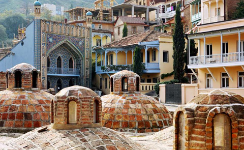
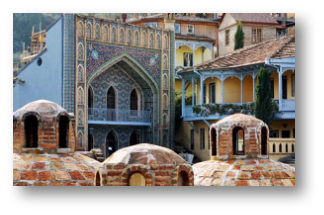
Enjoy sightseeing tour of Tbilisi, with visits to metechi church (12th-13th cc) - cross cupola church, part of the Royal
residential complex; District of Sulfur bathhouses; sioni Cathedral - the main church of Tbilisi dated to 7 th-19th cc;
Walking tour in the Old town and along Rustaveli Avenue, visit to recently built Holly Trinity Cathedral, one of the
largest Orthodox churches in the world.
Among the treasures of the city is the state museum of Georgia that houses an extraordinary collection of gold
filigree work dating from the 6th century BC among other items of repoussé work and jewelry.
Day 3: THU Tbilisi / Gori / uplistsikhe / Kutaisi (B/--/--)
Explore kartli province, the heart of the country, known for its fertile lands, numerous architectural monuments &
archaeological sites. This trip gives us an opportunity to visit impressive rock cut town uplistsikhe situated near town
Gori, birthplace of Joseph Stalin.
Well visit the museum which traces his life from his humble beginnings to his death. The house where he was born
and raised is in front of the museum itself. Gori provides a convenient jumping off point for our explorations of nearby uplistsikhe, an ancient cave town dating from the first half of the 1st millennium BC. The entire town is a complex of
rock-cut streets, residences, churches, secret tunnels, water passages, markets and the oldest theatre in Georgia. Of
the 700 existing caves, visitors have access to a mere 150.
Venture west to Kutaisi, the former Capital of Kolchis.
Day 4: FRI Kutaisi / Gudauri (B/--/--)
The next province we will explore is imereti, with its cool springs, green fields, and delicate manicured gardens. Here
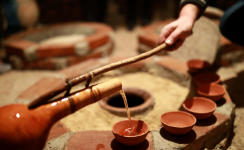
is the ancient capital of the Kingdom of Colchis - Kutaisi, now the second city of Georgia. We will visit the ruins of bagrati Cathedral (11th c), gelati Monastery complex (11th -12th cc), motsameta church. En route we will visit ceramic
market and ubisi architectural complex.
Day 5: SAT Gudauri / Kazbegi / Gudauri (B/--/--)
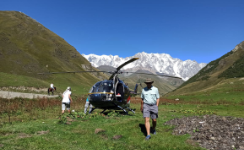
In order to see the high peaks, roaring rivers and mountain lifestyle of Georgias Northern borderlands we will travel
towards mtiuleti and khevi provinces via one of the oldest roads in Georgia, which the Russian Tsar Alexander I
named the Georgian Military Highway. If weather conditions permit well see ‘Mkinvartsveri or Kazbek meaning
‘ice-top in English, spent volcano soaring to height of 5047 m. Mount Kazbek is the third highest and one of the best
known peaks in the Caucasus. Its white pristine beauty wrapped in the rays of the rising sun almost fills the sky.
Grand and dignified, it is at times capricious, even savage. Natives of khevi often call this giant volcano looming over
their homes ‘the bride of the khevi.
Walking tour to Gergety Trinity Church – the most important altar of 14th century, located on the slope of Mount
Kazbek. The stone decoration represented on the façade of the church, lead us to the ancient rituals and believes.
Day 6: SUN Gudauri / Mtskheta / Telavi (B/--/--)
From mountains drive to kakheti region - the land of wine, en route explore Mtskheta the ancient Capital of Georgia
and its UNESCO sites. jvari Church (6th -7th cc) - a masterpiece of the early Medieval Period. This example of classic
tetra conch design with all its miniature size, strikes the viewers with its grandeur and integrity. svetitskhoveli
Cathedral that may be translated, as The Life-giving pillar” is the main church of Mtskheta and a sacred place where
the robe of Christ is being kept (11th c).
Day 7: MON Telavi / gremi / nekresi / Kvareli / sighnaghi / Telavi (B/--/--)
Today we will explore picturesque and the most fertile part of Georgia - kakheti, which borders the Great Caucasus
range from the north Alazani Valley, summits of which are over 3,000 m. This region is known as a birthplace of
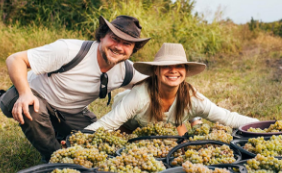
viticulture and wine- making. The reach land, burning sun and hard work have developed about 500 varieties of vine
in Georgia. The history, culture and lifestyle of Georgians are embodied in Georgian wine. It is a symbol of Georgian
hospitality, friendship, tolerance and a key to the mystery of Georgian longevity.
Day 8: TUE Telavi / alaverdi / ikalto / Shuamta / Tsinandali / Telavi (B/--/FD)
In Alazani valley visit elegant 12th c alaverdi cathedral with its sheer size & splendor; a place of welcome, beauty
and holiness. Drive to former Alexander Chavchavadze family residence with a marvelous garden, house-museum,
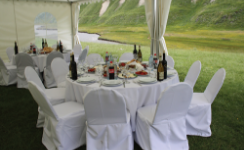
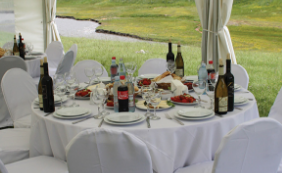
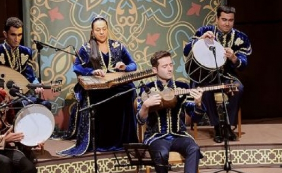
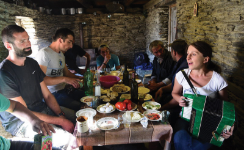
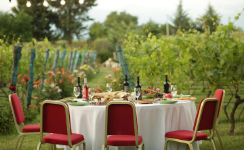
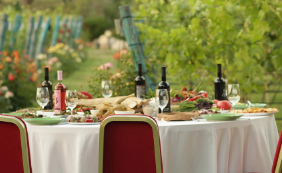
park and winery dating back to the 19th century. Farewell dinner with wine at the guesthouse, enjoy a traditional
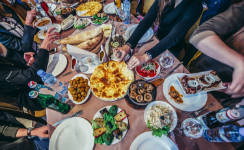
“Georgian Table,” laden with fine examples of the countrys rich culinary and winemaking legacy.
Day 9: WED Departure at 03:35
After dinner direct transfer to the airport.
The price based on 3* hotels in Tbilisi and Gudauri and guesthouses in Kutaisi and Telavi:
Double room Accommodation: 795 EUR / per person
H/B supplement 70 EUR / per person
Single room supplement 160 EUR / per person
Supplement for 4* hotels in Tbilisi and Gudauri and 3* hotels in Kutaisi and Telavi:
110 EUR / per person
H/B supplement 70 EUR / per person
Single room supplement 80 EUR / per person
Prices include: All transfers and transportations by comfortable vehicle; Accommodation upon request;
All breakfasts; 1 x farewell dinner with wine; A bottle of mineral water per person per day; English or
Russian speaking guide; Entrance fees to the museums and historical sites.
Prices exclude: Flights; travel insurance; single room supplement; porters; alcohol beverages; meals and
services except described.